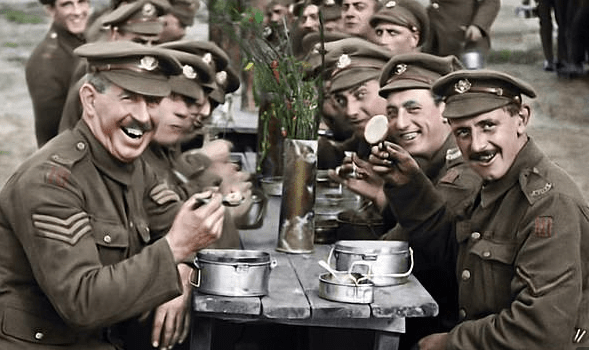
They Shall Not Grow Old
It’s now been 100 years since the end of World War 1.
Just let that sink in.
100 Years.
In the overall history of mankind, it is but a blink of the eye.
But thinking about how things have “progressed” 100 years is a long time – a lot has happened since 1918.
But “progress” can be measured in lots of different ways.
If we think about health, sanitation, environment, pollution, science, technology, security, income, it’s fairly obvious that we – as the human race – have made massive progress in the last 100 years.
I’m still in absolute awe that we can be flown safely and in comfort around the world.
And that we can communicate with our friends, family and colleagues with absolute ease, wherever they are on the planet.
There are numerous examples we could talk about in terms of the massive progress we’ve made.
But there’s one area where I think we are, if anything, going backwards.
It’s over-consumption.
Now, I’m not gonna get all preachy here, or all right-on hippy either – that’s not my style, nor do I think it helps.
But I do think it helps to have the conversation.
What we are doing right now is unsustainable and will need the resources of more than the single planet on which we live.
So, what’s the answer?
There is no single silver bullet.
But there are things we can do to make “progress”
We can all do our bit in whatever way we can.
It could be to just “think” about what we are doing and the impact it has.
Do we really need that plastic tat that will be used for a second but persist in the environment for hundreds of years?
Is it so important that we have that plastic stirrer to enhance our enjoyment of our drinks?
Can we walk or cycle instead of taking the car?
Can we turn down the heating by a degree?
Can we open a conversation when we see something that will impact our environment?
Can we educate ourselves on our own personal impact?
Again, we could use numerous examples, but you get the idea.
The inspiration for this was watching the documentary “They Shall Not Grow Old”.
For those that haven’t seen it, PLEASE take a look.
It brings footage of the First World War to life, by modifying the speed to real pace and converting the old footage to colour. They have also, through the magic of technology, added sound.
If you watch it and immerse yourself in it, it’s the most moving piece of film you’ll see this year!
And it is a stark reminder of the fragility of our life on this planet.
Our ancestors fought and died for the freedom that we enjoy today.
I reckon it’s a good idea to have a think about how we use that freedom for our future generations.
 JT's insights